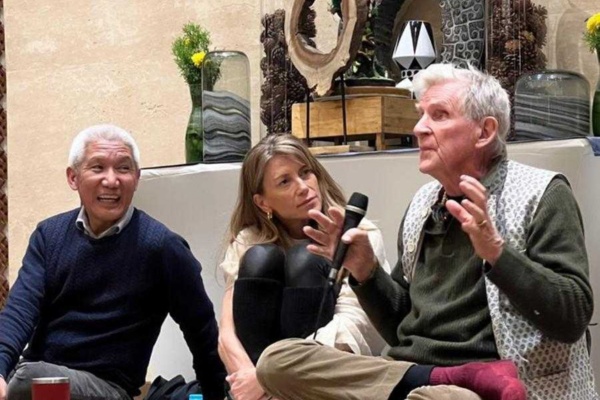
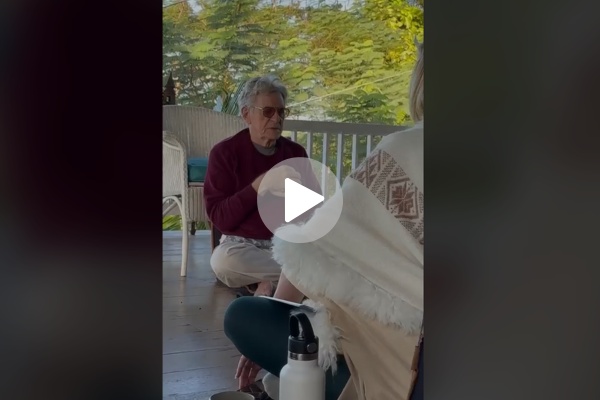
In Memory of Robert “Bob” Thurman
A tribute by Katy Saeger
- 8 mins to read
If you had one conversation with Bob Thurman, chances are it changed your life.
That is the sentence I have heard more than any other since Bob passed. A lecture. A class. A chance encounter. A book. A question asked after a talk. Somehow Bob always seemed to arrive at exactly the right moment, and when he did, you walked away seeing yourself and the world a little differently.
There were many versions of Bob. Professor Bob. Tenzin Bob. Activist Bob. Philosopher. Storyteller. Mischievous Bob. Spiritual father. Dad. Baba.
But beneath every role was something much simpler.
A man completely devoted.
Devoted to wisdom. To His Holiness the Dalai Lama. To Tibet and the Tibetan people. To his students. To humanity. And above all, to his family.
In recent years, I had the privilege of spending time around Bob, Nena, and the extraordinary community that surrounds Tibet House and Menla. I quickly realized that Bob’s greatest gift wasn’t simply what he knew. It was how freely he gave it away.
He made wisdom accessible to everyone.
He could spend an hour speaking with scholars about the deepest questions of philosophy and then turn to someone who had never heard the word “Buddhism” and offer that same wisdom in a way that felt personal, practical, and full of possibility. He wasn’t trying to convince anyone of what to believe. He simply wanted people to suffer less, love more deeply, and discover what was already possible within themselves.
That generosity defined him.
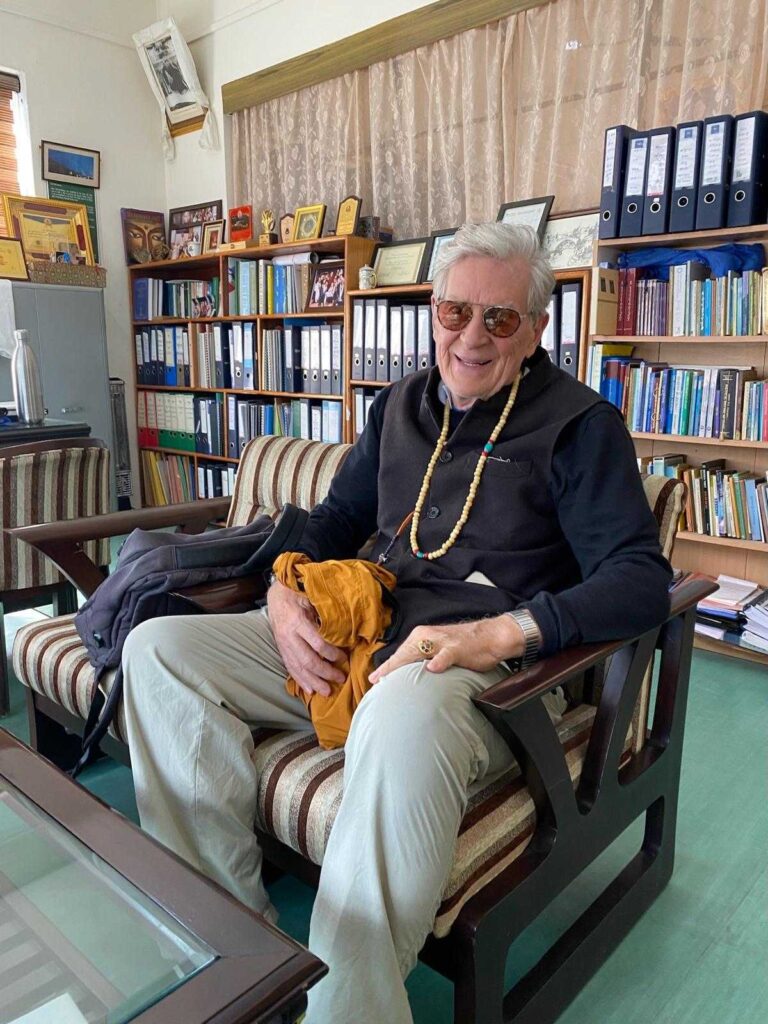
Bob’s own path began through hardship. Losing the sight in one eye as a young man ultimately led him to India, where he met His Holiness the Dalai Lama, a meeting that shaped the rest of his life. He became the first Westerner ordained as a Tibetan Buddhist monk by His Holiness before later returning to academic life, believing he could reach more people through the university than from inside a monastery.
That decision became the arc of his life.
He helped found Tibet House US at His Holiness’s request, became the first holder of an endowed chair in Buddhist Studies in the West at Columbia University, translated foundational Buddhist texts, wrote dozens of bestselling books, and spent decades helping introduce Tibetan wisdom to quite possibly hundreds of millions of people around the world.
But remarkable as those accomplishments were, they never felt like the whole story.
Bob’s message was always love.
One of the greatest privileges of my life was witnessing Bob’s relationships with both His Holiness and with Nena.
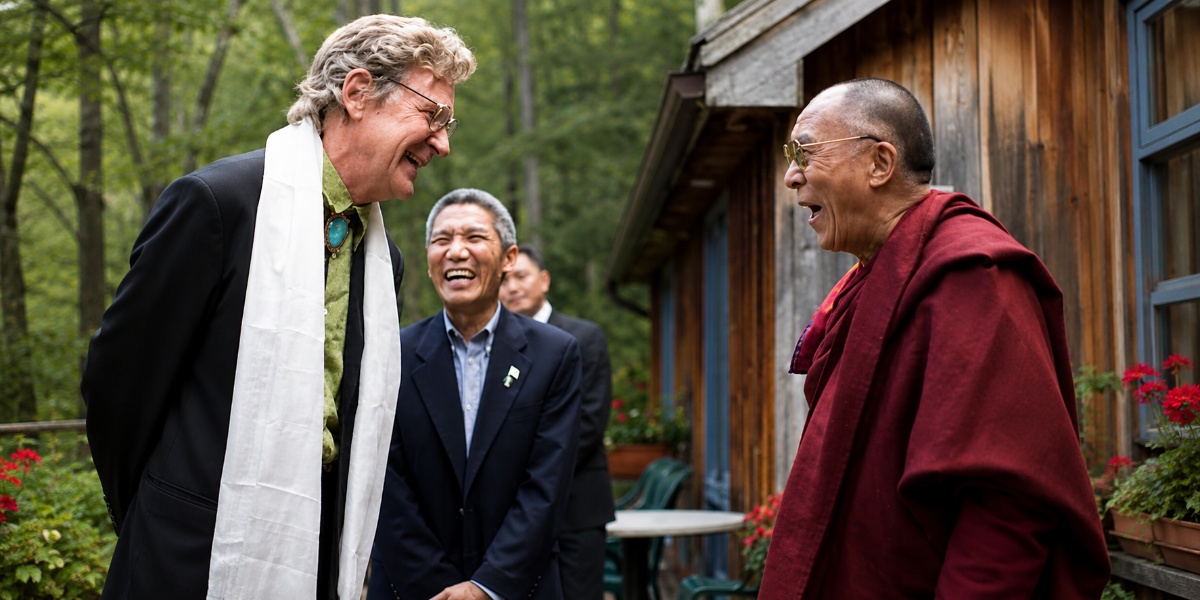
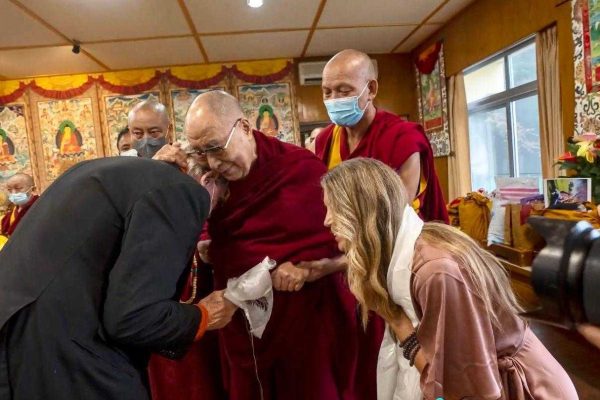
The first time I witnessed Bob reunited with His Holiness after years apart, the room and all of us seemed to disappear. What remained was simply two old friends whose lives had been woven together through decades of trust, laughter, devotion, and service. There was such tenderness between them that everyone present felt it.
On our most recent visit, I witnessed another moment I will carry with me forever.
His Holiness gently pulled Bob close.
Forehead to forehead, watery eyes. Heart to heart.
With extraordinary tenderness, he whispered to all of those around him:
“Bob is home.”
Together we all shared that extra pause and moment of love and recognition, between two very dear brothers in this lifetime and beyond.
Those words were a profound blessing. An acknowledgement of a life lived exactly as it was meant to be. A life of service. A life of devotion. A life of love.
Yet as profound as that relationship was, the deepest expression of Bob’s heart was found at home.
Watching Bob and Nena together was its own teaching.
Their love carried decades of partnership, humor, loyalty, admiration, and quiet understanding. She was his confidante, creative partner, fiercest advocate, and home. They built a life of uncommon purpose together, and it was impossible to spend time with them without recognizing how much of Bob’s work rested upon that extraordinary partnership and love.
The same love extended naturally into his family.
Nothing lit Bob up quite like talking about his children and grandchildren. Beneath the renowned scholar was a deeply proud father and grandfather who delighted in their lives, celebrated their individuality, and loved them without reservation. His family was never separate from his life’s work. They were its foundation.
For someone who spent decades teaching compassion, wisdom, and interconnectedness, he lived those values in every part of his life.
That may be his greatest teaching.
The world has lost one of its most masterful teachers, but what comforts me is something Bob demonstrated every day: wisdom does not disappear when the teacher does. It lives on in how we love. How we serve. How we remain curious. How we help another person suffer a little less.
As Nena recently shared with me, “Bob would want us to be happy.”
That feels exactly right.
To the world he was Professor Robert Thurman.
To those fortunate enough to know him, he was simply Bob.
A beloved husband.
A devoted father and grandfather.
A loyal friend.
A joyful teacher.
A man who spent his entire life reminding us of our own limitless capacity for wisdom and compassion.
Thank you to everyone who has shared stories, photographs, prayers, and memories over these past 49 days. Together they reveal not just the extraordinary scholar the world knew, but the deeply loving human being his family and closest friends cherished.
If Bob touched your life, I hope you’ll share your story below. His family is reading every message.
And if you’re able, please consider supporting Tibet House and the mission Bob devoted his life to protecting.
Bob is home.
Te amo, para siempre.
With love,
Katy